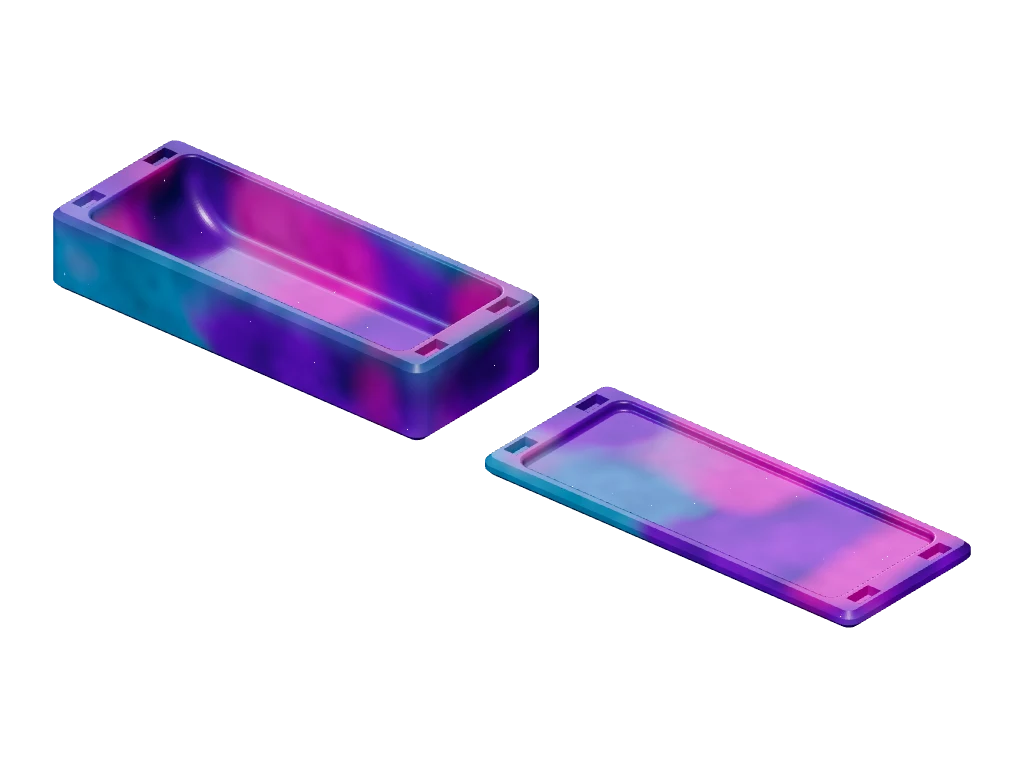
Dice storage and rolling box
A box and lid for keeping dice together and rolling at the table.
From $22.00

Loading 3D preview…
Free for personal use. Please don't sell prints.
Millimeters · flat on the print bed · separate parts in a ZIP.
Bambu A1 · Fits the 256 mm bed
Print each ring flat on a broad face, PETG at 100% infill with a 0.4 mm nozzle; the stem gap passes through the full height. No supports. The complete set includes a 4 mm gap between rings. The store reserves an 11 mm bed margin.
Clearances change full diameters/spans once: case clearance reduces the outside and movement clearance enlarges the bore. A total 0.2–0.4 mm is a starting trial range. The three trials run A / B / C from left to right, with increasing clearance on both fits; separate download filenames identify each trial. Keep them in order after printing; the parts have no embossed letters. Straight circular or rounded-rectangle case seats and a concentric round movement only. Use one trial spacer, with separate suitable axial retention. Check stem, rotor, balance, dial feet, clamps and caseback clearance. Clean all print debris before a dry fit. Physical print and fit tests are pending; printed dimensions can vary.
Measured PETG watch spacer: straight bore or stepped flange recess. Customize the body, flange, depth and circular or rounded-rectangle case seat.
Three separate rings with the same height and stem opening. Trial steps change both diameter clearances together; they are examples, not guaranteed printer tolerances.
Measure the actual case seat and movement
Measure the straight internal seat where the spacer will sit, and the movement’s round outside centering surface at that same height. Use calipers and a tracing of the seat, not the watch’s advertised outside shape or size. Choose the finished height from the available space; straight-bore mode centers sideways and has no axial support ledge.
Top view · nominal spacer · full-height stem gap opens right. Dashed outlines are measured mating parts; they are not printed.
Finished set: 3 separate trial spacers, each 3 mm tall with a 4 mm stem gap. Use one in the watch.
| Ring | Outside | Min. inside | Case gap¹ | Movement gap¹ |
|---|---|---|---|---|
| A · less clearance | 32.9 | 26.1 | 0.1 | 0.1 |
| B · nominal | 32.8 | 26.2 | 0.2 | 0.2 |
| C · more clearance | 32.7 | 26.3 | 0.3 | 0.3 |
¹ Total clearance across each span or diameter, not per side. Outside = seat minus case clearance; inside = movement plus movement clearance. Minimum bore facets clear the whole requested circle.
A has 0.1 mm less clearance at both interfaces; C has 0.1 mm more. These change together. Identify loose spacers by outside diameter: A is largest, C smallest. There are no printed labels. Separate configurations allow independent fit changes.
The movement must be round and concentric with the straight case seat; for a rectangle the stem must cross the midpoint of its right side. Check the stem/crown tube height independently; changing a straight spacer’s height does not reposition the movement. The full-height gap needs to clear the complete stem and tube without making contact.
Use separate suitable axial retention. Check the rotor, balance, caseback, dial feet, clamps and all moving parts through their complete travel. Straight mode has no shoulder. There are no clamp pockets or dial-foot holes; non-round movements need a different design. Never force a spacer into place or transfer retention loads to the stem.
Print dimensions vary; trial steps are size choices, not a stated manufacturing tolerance. Dry fit carefully and remove all strings, burrs and debris away from the movement. This PETG spacer is not a gasket or a shock protection system and does not establish water resistance. Physical print and fit testing are pending. An exact stock part is usually cheaper when available.
Fit a round watch movement to a measured circular, square or rounded-rectangle case seat. Choose a straight centering bore or a stepped recess for a measured rigid circular seating flange. Set the body and flange diameters, recess depth, ring height and full-height stem gap independently. Choose one nominal spacer or three fit trials; use only one in the watch. PETG, with separate suitable axial retention; no dial-foot holes or clamp pockets. Physical print and fit testing are pending; presets are measurement examples, without movement or case compatibility claims. Measure the actual straight case seat, not the outside watch size. For a circular seat enter its inside diameter; for a rounded rectangle measure stem-side width, crosswise length and equal quarter-circle corner radii, with the centered stem opening facing right. Outside = measured seat minus total case clearance; each outside corner radius is reduced by half that clearance, down to zero. A straight bore uses the measured round movement centering diameter. Stepped mode needs a separately measured rigid, flat, continuous circular seating flange: enter the body diameter below it, its largest flange diameter and the finished recess depth from the ring top. The shoulder contact plane is ring height minus recess depth above the bottom. Recess depth is a chosen seating position, not flange thickness or an automatic crown-height correction. Confirm that only the rigid flange underside contacts the shoulder; check projections, dial, rotor, balance and every moving part separately. No hardware or movement is modeled in the CAD/STL. Body and flange bores each add the same total movement diameter clearance; all clearances are across a span or diameter, not per side. Three trials change both case and movement clearances together: A has less, B nominal, C more clearance. Both body and recess bores change in stepped mode. Identify separate trials by outer size: A largest, C smallest. No printed labels. Use one spacer in the watch, never a stack of all three. Separate suitable axial retention remains required; the shoulder is not a latch or clamp. Never transfer retention loads to the stem. Independently check stem/crown tube alignment, full-height stem gap, caseback, dial feet and clamps. Straight mode has no axial ledge. Straight concentric circular or rounded-rectangle case seats and round movements only; no stepped case seats, tapers, barrel sides, ellipses, off-center stems, dial-foot holes or clamp pockets. Every ring needs at least 1.2 mm radial wall; stepped mode also keeps at least 1.2 mm shoulder height, 1.2 mm recess depth and 1.2 mm radial overlap under the actual measured flange after bore clearance, for every trial. The full-height stem gap is at most 60% of the smallest body bore. Outer facets stay within the seat; inner tangent facets clear the complete requested circles. PETG, 100% infill, 0.4 mm nozzle; straight rings flat, stepped rings smaller bore down and larger recess up. The shoulder is supported from below; no supports. The complete set, with 4 mm between rings, must fit the 245 mm usable envelope in the Bambu A1's 256 mm bed. Pricing uses generated polygon material volume and surface area, including the shoulder, both bores, stem opening and every ring; checkout repeats validation and pricing. Fit steps are size choices, not a manufacturing tolerance. Clean all strings, burrs and print debris away from the movement before a careful dry fit; never force assembly. Physical print and fit testing are pending. No brand compatibility, water resistance, gasket or shock-protection claim. Case, movement, retention and tools are separate. An exact stock part may cost less when it fits. Original geometry; no competitor CAD copied.
A box and lid for keeping dice together and rolling at the table.
From $22.00
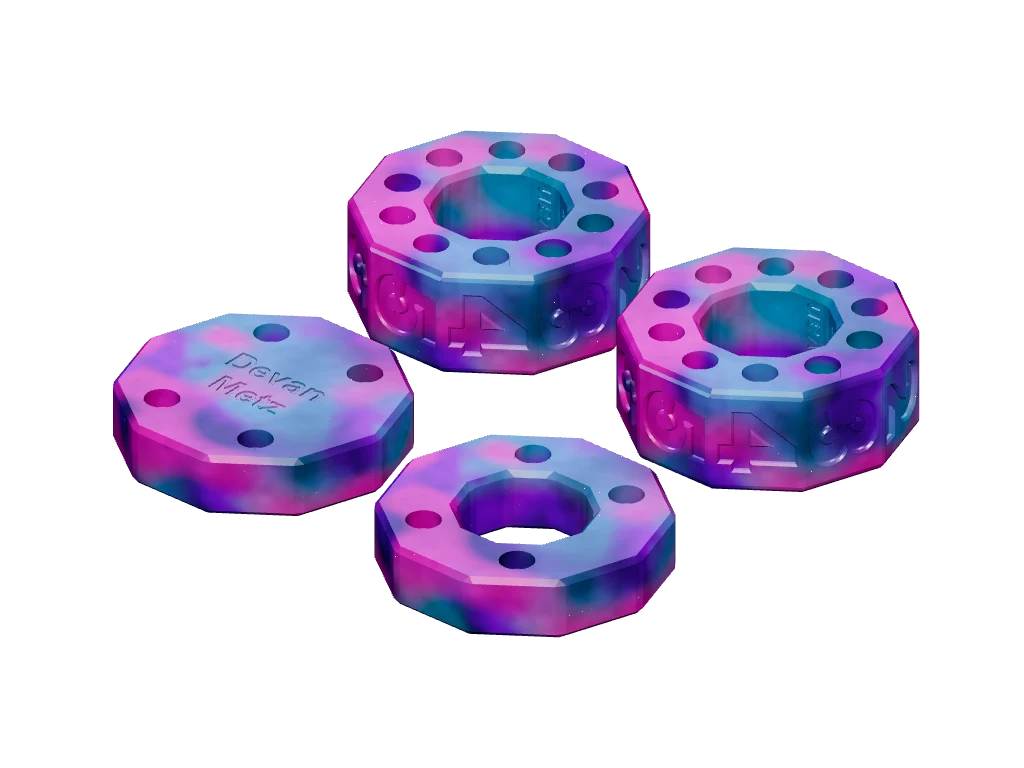
Two numbered rotary rings for tracking a two-digit game total.
From $16.00
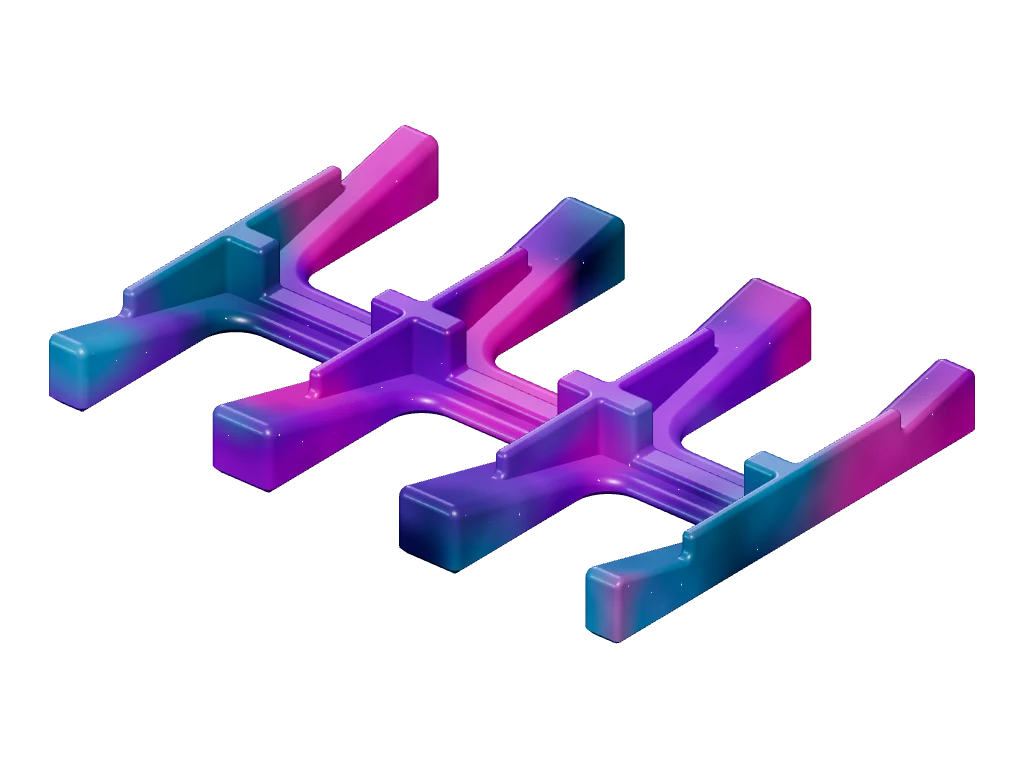
Fit measured sleeves and loose deck stacks, with optional independent sizes and deck counts in two opposing rows. Open finger access; original tray remains available.
From $18.00Customizable
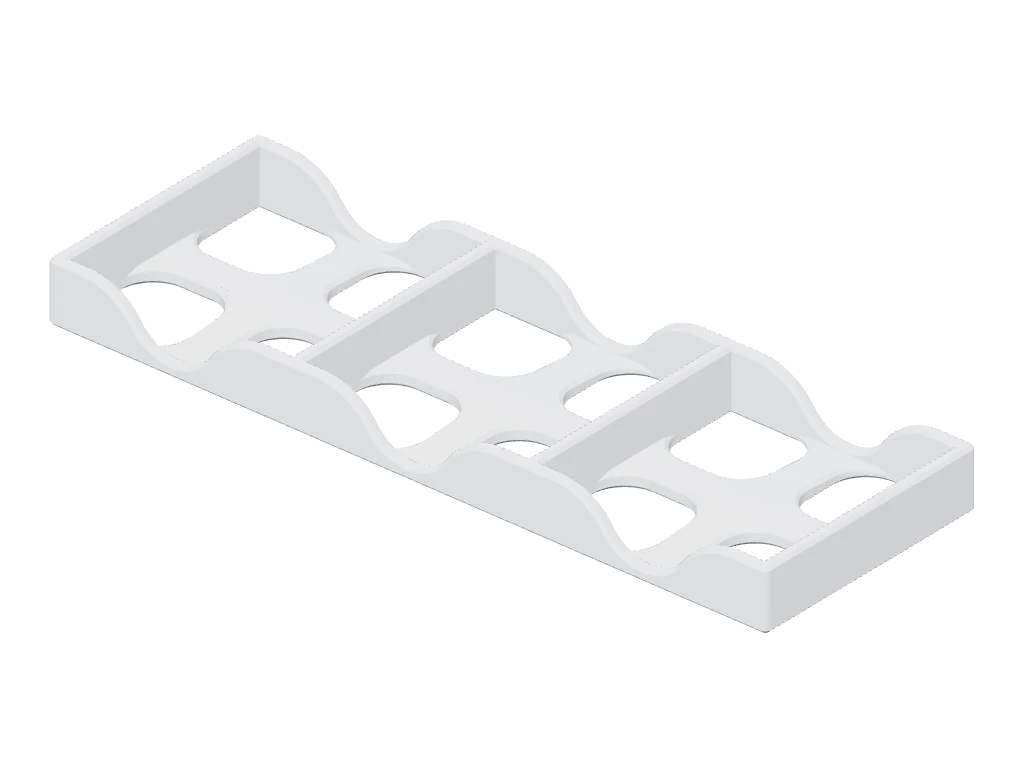
A long, narrow frame for separate card stacks.
From $18.00