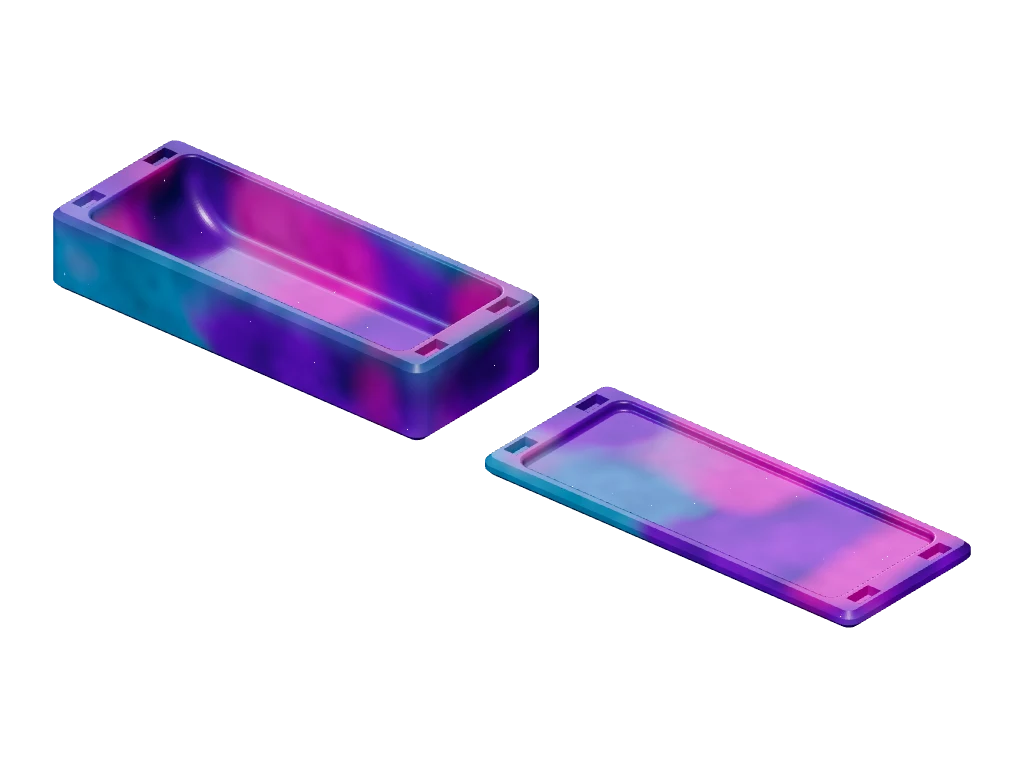
Dice storage and rolling box
A box and lid for keeping dice together and rolling at the table.
From $22.00

Loading 3D preview…
Free for personal use. Please don't sell prints.
Millimeters · flat on the print bed · separate parts in a ZIP.
Bambu A1 · Fits the 256 mm bed
Print soles flat, openings up, with 4 mm between caps. TPU, 100% infill, 0.4 mm nozzle; direct spool feed on the A1, no supports. The store reserves an 11 mm bed margin.
4 identical caps per set; cart quantity counts sets. The fit allowance changes each full span once: −0.2 mm is 0.1 mm of TPU interference per side. Start with one trial cap and adjust to the actual leg and TPU before ordering a set. Solid or already capped ends must be flat and parallel to the floor. Measure leaning legs in horizontal planes; the sole stays level. Check an unloaded fit and floor finish first. Physical print, fit and wear tests are pending.
One set of TPU sleeves for unusual furniture legs. Match horizontal foot/lip outlines, taper and measured lean; choose one, two or four identical caps.
Example: 25.4 × 19.05 mm at the foot, 28 × 21.5 mm at a lip 20 mm up. Measure each leg; front and rear legs can differ.
Measure the same leg at two horizontal heights
Remove the old cap. With the furniture in its normal position on a level floor, trace the bare foot and a second horizontal section at the chosen sleeve lip. Keep width (X) and length (Y) in the same directions. Engagement is the vertical height between those planes. Use actual millimeters; a leaning round tube makes a horizontal ellipse, so its nominal diameter is insufficient.
For rounded rectangles, check both horizontal corner radii with a radius gauge or tracing. Two side lengths alone do not define the corners. Equal sides make a rounded square. Tapers must widen toward the lip around their centerline and change smoothly. Centered mode is for upright legs; choose measured lean for shifted centers.
A negative allowance makes the printed cavity slightly smaller for a snug TPU fit; positive values leave clearance. Interference is limited to 0.4 mm total and 2% of the smallest measured span. Start with a single cap if you need to check the fit; printed tolerances and TPU stiffness vary.
Match sole thickness across every leg to avoid wobble. Check an unloaded fit without forcing, and test a hidden floor area for marking or grip. These sleeves do not repair a damaged leg or serve as height extenders. Physical print, fit, retention, wear and floor-finish tests are pending; no load or scratch-prevention rating is claimed.
TPU sleeves for unusual flat-ended furniture legs. Match horizontal outlines at the foot and sleeve lip, then optionally enter their measured sideways center shift for a leaning leg. The sole stays flat. Choose one, two or four identical caps per set. Stock angled caps or felt pads can cost less when they fit. Physical print, fit, retention, wear and floor-finish testing are pending; presets are measurement examples. Remove the old cap and measure the actual bare leg in its normal position over a level floor. Use horizontal outlines at the flat foot and at the chosen lip, with width X and length Y in fixed directions. Engagement is the vertical distance between these planes, not distance along the leg. A leaning round tube has a horizontal elliptical section; do not substitute its nominal tube diameter. For rounded rectangles measure both horizontal corner radii; ellipses must curve continuously, with equal spans making a circle. In measured lean mode use a square or plumb reference to transfer both centers to one top-view tracing: the lip center minus foot center is +X right, -X left, +Y up the tracing and -Y down. Offsets are horizontal distances, not angles. Remeasure both outlines and shifts if the lip height changes. Upright mode keeps the original centered geometry and ignores hidden lean fields. The sole remains flat and its thickness is unchanged by the lean. The leg end must already be flat, solid or soundly capped, and parallel to the floor; no inclined end face, bare hollow tube edge, curved or twisted leg, obround, irregular outline, bulge or nonlinear centerline. The taper must widen around its own straight centerline toward the lip around the complete outline, including diagonal corners. Slide the cap along that centerline without forcing. Every cap in a set has the same dimensions and signed lean; opposite or differently leaning legs need separate configurations. Signed total fit allowance is applied once to each span as a normal offset around the curve; negative values make a snug TPU cavity, positive values add clearance. Interference is limited to 0.4 mm total and 2% of the smallest measured span; default -0.2 mm. Printed tolerances and TPU stiffness vary; choose one trial cap if fit is uncertain. Wall thickness is horizontal. Match sole thickness across every leg, including retained caps, to avoid wobble. Check an unloaded fit and a hidden floor area for marking or grip; inspect retention and wear. These are replacement sleeves, not height extenders or repairs for damaged legs. Physical print, fit, retention, wear and floor-finish testing are pending; no load, slip-resistance or scratch-prevention rating is claimed. Stock angled caps, rubber tips and felt can be cheaper when they fit. Print soles down and openings up, TPU at 100% infill, 0.4 mm nozzle, direct spool feed on the Bambu A1, no supports for accepted measurements. Every wall vertex's combined horizontal lean and taper movement is limited to half its vertical rise. The complete one/two/four-cap layout, including all lean extents and 4 mm gaps, must fit the 245 mm usable envelope inside the A1's 256 mm bed. Pricing follows actual solid material volume and surface area for the complete set; pure lean preserves volume while changing surface. Checkout validates and recalculates. Cart quantity counts complete sets; hardware, furniture and any floor pads are separate. Presets are measurement examples without brand-fit claims. Original geometry; no competitor CAD copied.
A box and lid for keeping dice together and rolling at the table.
From $22.00
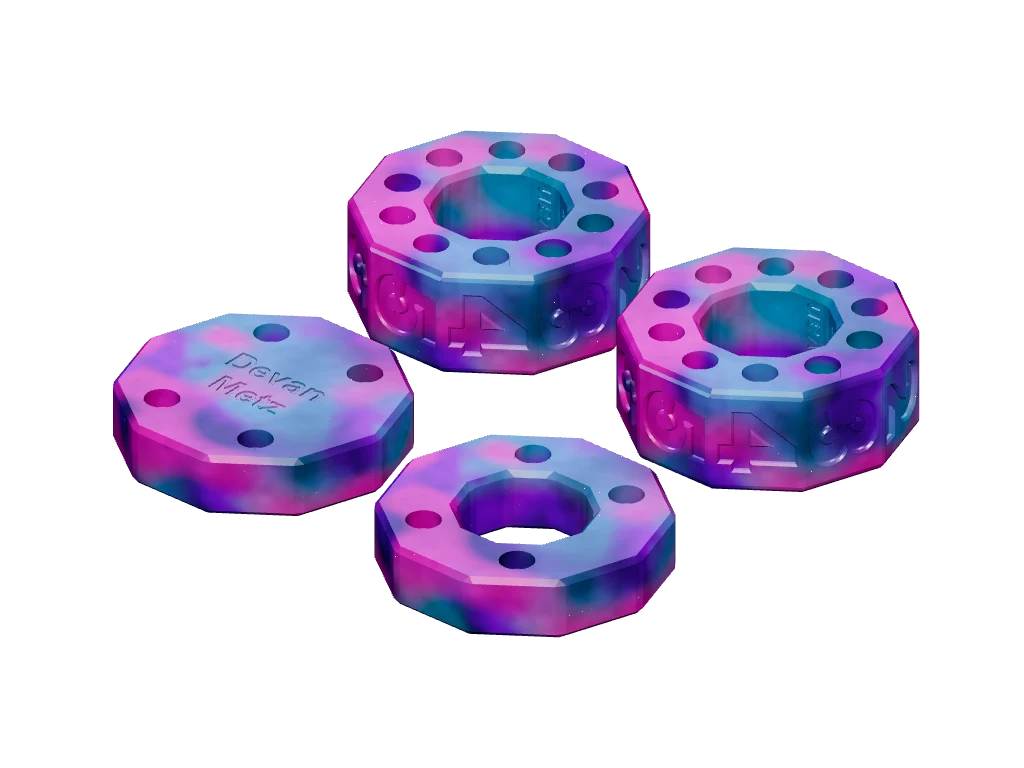
Two numbered rotary rings for tracking a two-digit game total.
From $16.00
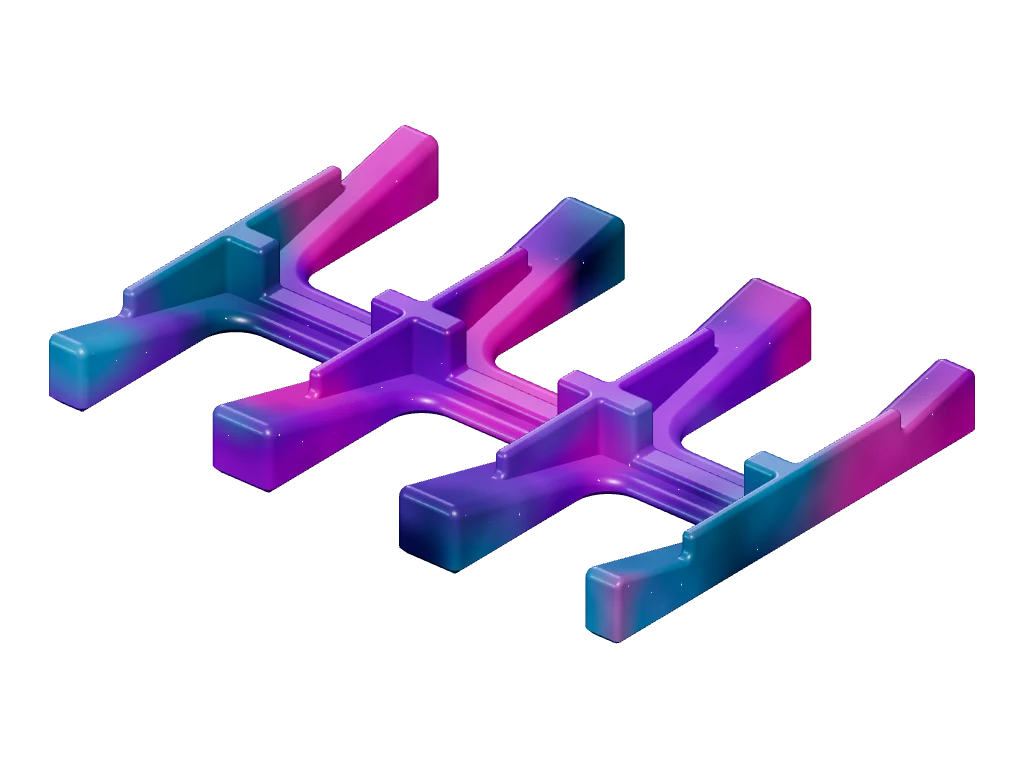
Fit measured sleeves and loose deck stacks, with optional independent sizes and deck counts in two opposing rows. Open finger access; original tray remains available.
From $18.00Customizable
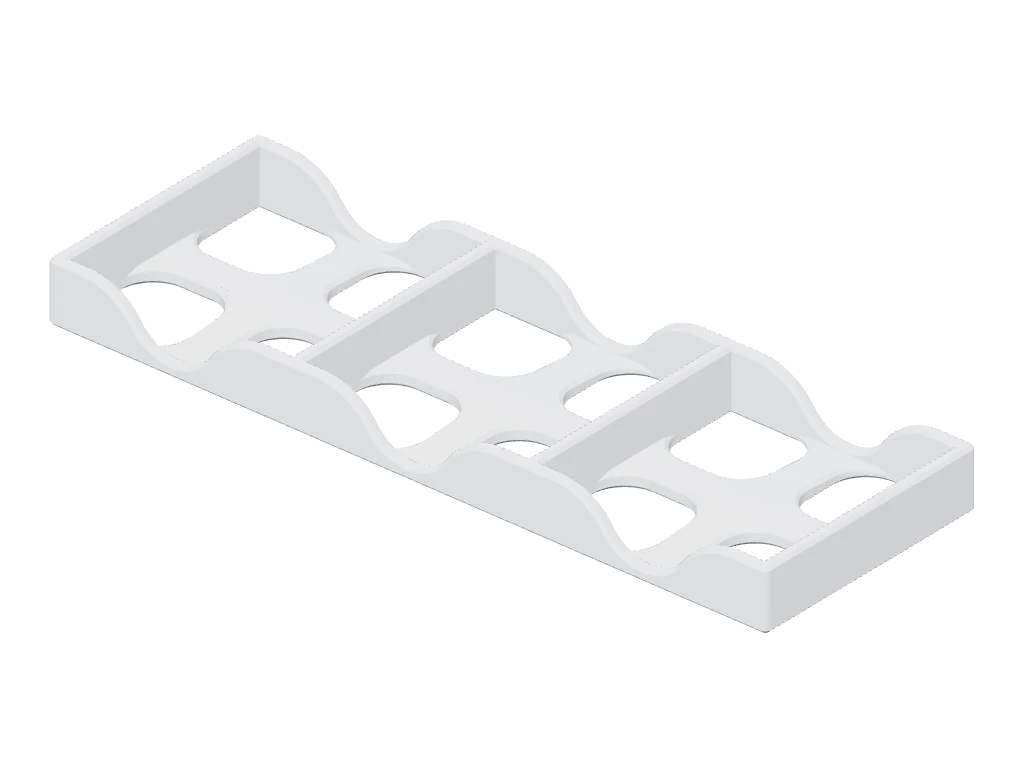
A long, narrow frame for separate card stacks.
From $18.00